In today’s digital landscape, understanding the content marketing funnel is crucial for businesses looking to engage and convert their audience effectively. This funnel represents the journey a potential customer takes from awareness of your brand to making a purchase and becoming a loyal advocate. With countless businesses vying for attention, knowing how to navigate each stage of the funnel can set you apart. In this step-by-step guide, we will break down the content marketing funnel into its key stages, explore the top strategies for each phase, and provide insights on creating compelling content that resonates with your audience. You’ll learn how to nurture leads, optimize your funnel for better conversions, and measure success through key performance indicators (KPIs). Let’s dive in!

Key Takeaways
- The content marketing funnel consists of distinct stages that guide consumers from awareness to conversion.
- Effective strategies are essential at each stage of the funnel to maximize audience engagement and increase conversions.
- Compelling content is crucial for creating interest and sparking awareness among potential customers.
- Nurturing leads through consideration and intent stages requires personalized content and targeted communication.
- Measuring success with KPIs is vital for optimizing the content marketing funnel and improving overall performance.
Understanding the Content Marketing Funnel: Definitions and Stages
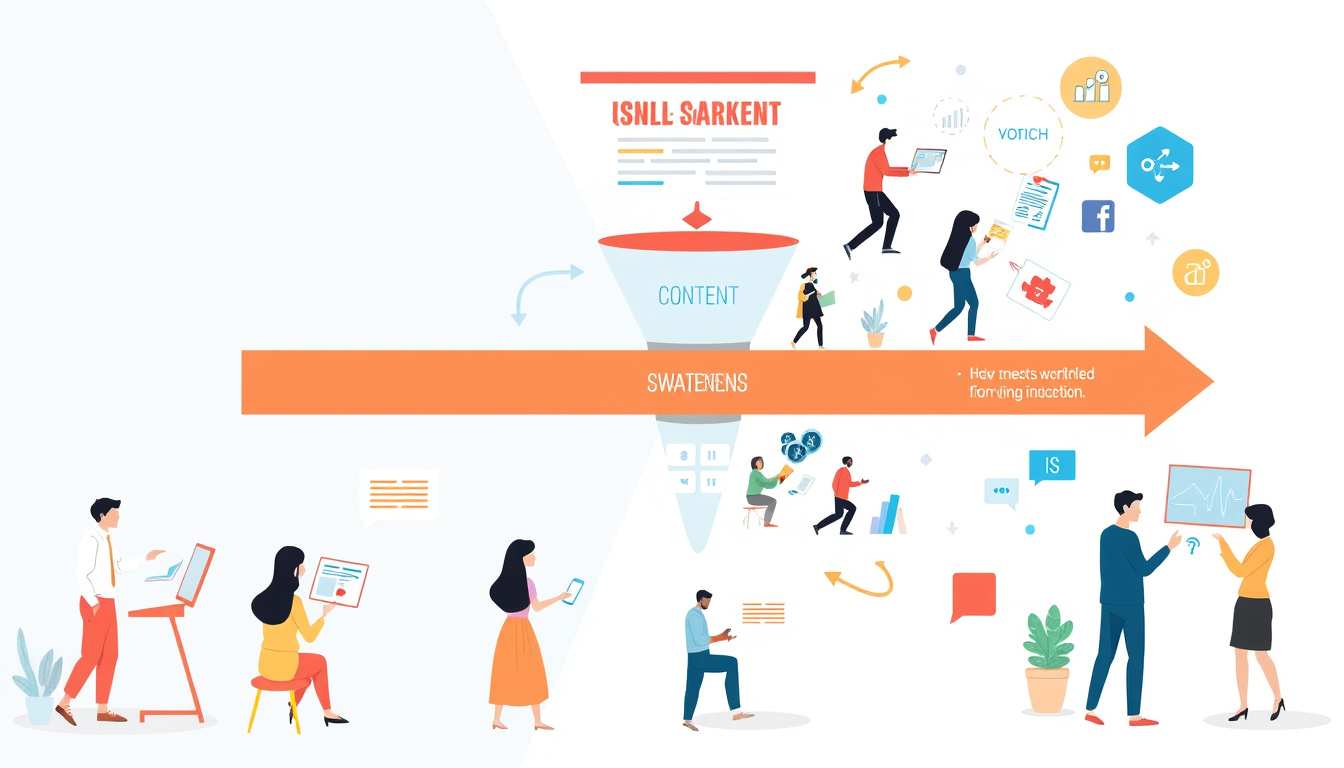
The content marketing funnel is a structured approach that guides potential customers through their journey from awareness to decision-making. This process consists of several stages, commonly categorized into three main phases: awareness, consideration, and decision. In the awareness stage, potential customers first learn about your brand, often through blog posts, social media content, or videos aimed at educating them about their pain points. As they move into the consideration phase, they begin evaluating different solutions, where more detailed content such as eBooks, case studies, or webinars becomes essential. Finally, during the decision stage, prospects look for specific details—like product comparisons or testimonials—helping them finalize their purchase decision. Understanding these stages allows marketers to tailor their content effectively, ensuring that each piece is relevant to the audience’s current mindset and move them closer to conversion.
Top Strategies for Each Stage of the Funnel
To effectively guide your audience through the content marketing funnel, it’s crucial to tailor your strategies to each stage: awareness, consideration, and decision. In the awareness stage, focus on creating educational content that addresses common pain points or frequently asked questions, such as blog posts and infographics. This helps attract potential customers who are just starting to understand their needs. In the consideration stage, provide more detailed content, like webinars and case studies, that showcase your expertise and how your solutions can address specific challenges. Finally, at the decision stage, leverage content like product demos and testimonials, encouraging prospects to take the final step towards purchase. By aligning your content marketing efforts with each stage of the funnel, you enhance the user experience and increase the likelihood of conversion.
‘Content is the atomic particle of all digital marketing.’ – Rebecca Lieb

Creating Compelling Content for Awareness and Interest
Creating a compelling content marketing funnel is essential for guiding potential customers from awareness to interest and ultimately to conversion. At its core, a content marketing funnel comprises different stages that align with your audience’s journey, each designed to address their needs and questions at that specific point. The first stage, awareness, is where potential customers discover your brand through engaging and informative content, such as blog posts or social media updates, that captures their attention. As they move to the interest stage, you provide deeper insights, like whitepapers or case studies, tailored to address their evolving needs. By strategically offering valuable content at each stage, you not only build trust and credibility but also nurture leads, ensuring that they have the knowledge necessary to move forward in the purchasing process. Establishing a well-structured content marketing funnel is crucial in modern digital marketing, helping businesses enhance their visibility while guiding potential customers through their unique journeys.
Nurturing Leads Through Consideration and Intent
Nurturing leads through the consideration and intent stages of the content marketing funnel is crucial for converting potential customers into loyal clients. At this point in the funnel, prospects are actively researching and evaluating their options, seeking valuable information that addresses their specific pain points. It’s essential to create targeted content that speaks to their needs, such as in-depth guides, comparison articles, and case studies that highlight successful outcomes. By offering this kind of tailored content, businesses can position themselves as trusted authorities, guiding leads towards making informed purchasing decisions. This approach not only enhances the user experience but also cultivates brand loyalty and increases the likelihood of conversion.

Optimizing Your Funnel for Conversions and Retention
When it comes to optimizing your content marketing funnel for conversions and retention, understanding each stage is crucial. A content marketing funnel is a systematic approach that guides potential customers from awareness to a purchase, and finally to loyalty. To effectively boost conversions, ensure that your content is tailored for each stage of the funnel, addressing the specific needs and concerns of your audience. Begin with engaging top-of-funnel content that sparks interest, such as informative blog posts or eye-catching videos. Next, move to the middle of the funnel with deeper insights, like case studies or webinars, that nurture leads and provide additional value. Finally, at the bottom of the funnel, present compelling calls-to-action that drive the purchase decision, reinforced with testimonials and product demos. Retention is equally vital; establish ongoing engagement with your customers through newsletters, exclusive content, and continuous feedback loops to maintain brand loyalty and encourage repeat purchases. By fine-tuning each aspect of your content marketing funnel, you’re more likely to see improved conversion rates and a loyal customer base.
Measuring Success: KPIs for the Content Marketing Funnel
Measuring success in the content marketing funnel is essential for understanding how well your content engages your audience and drives conversions. The KPI (Key Performance Indicator) framework helps you gauge effectiveness at each stage of the funnel, from raising awareness to generating leads and ultimately converting prospects into loyal customers. Key metrics to consider include website traffic, lead generation rates, conversion rates, and engagement levels such as time spent on page or bounce rates. By analyzing these KPIs, you can make informed decisions on where to optimize your strategies, ensuring that your content not only resonates with your audience but also contributes to your overall business goals. This systematic approach to measuring the content marketing funnel frameworks success in a way that aligns with both customer needs and company objectives.
Frequently Asked Questions
What is the content marketing funnel?
The content marketing funnel is a model that outlines the stages a potential customer goes through, from initial awareness of your brand to the final conversion and beyond. It typically consists of three main stages: Awareness, Consideration, and Decision.
What strategies should I use at each stage of the content marketing funnel?
At the Awareness stage, focus on creating informative blog posts and social media content to attract visitors. For the Consideration stage, provide in-depth guides, case studies, or webinars that address specific needs. Finally, utilize product demos or testimonials during the Decision stage to encourage conversions.
How can I create compelling content that engages my audience?
To create compelling content, understand your audience’s pain points and interests. Use storytelling, visual elements, and data-driven insights to resonate with them. Ensure your content is valuable, relevant, and aligns with the stage of the funnel it targets.
What are some key performance indicators (KPIs) for measuring success in the content marketing funnel?
Important KPIs include website traffic, conversion rates, lead generation numbers, engagement metrics (likes, shares, comments), and customer retention rates. These indicators help evaluate the effectiveness of your content at each stage of the funnel.
How can I optimize my content marketing funnel for better conversions?
To optimize your funnel, regularly analyze your performance data, conduct A/B testing on your content, personalize your messaging for different audience segments, and ensure a seamless user experience from awareness to conversion.