In the competitive world of digital marketing, understanding the marketing funnel stages is crucial for boosting your sales strategy. Whether you’re a small business owner, startup founder, or marketing manager, navigating through these stages can significantly impact your conversion rates and overall business growth. This guide will take you through the essential marketing funnel stages, illustrating each phase in detail and explaining their importance in targeting your audience effectively. You’ll also discover practical techniques to nurture leads, measure success through key performance indicators (KPIs), and optimize your sales strategy for maximum conversions. Let’s dive into the world of marketing funnels and transform your approach to achieving your business goals.

Key Takeaways
- The marketing funnel consists of distinct stages that guide potential customers from awareness to purchase.
- Understanding your target audience is crucial for tailoring strategies at each stage of the marketing funnel.
- Nurturing leads effectively through personalized communication can significantly improve conversion rates.
- Key performance indicators (KPIs) are essential for measuring the success of your marketing efforts at every funnel stage.
- Optimizing your sales strategy based on funnel insights can lead to increased efficiency and higher sales conversions.
Understanding the Marketing Funnel: An Overview
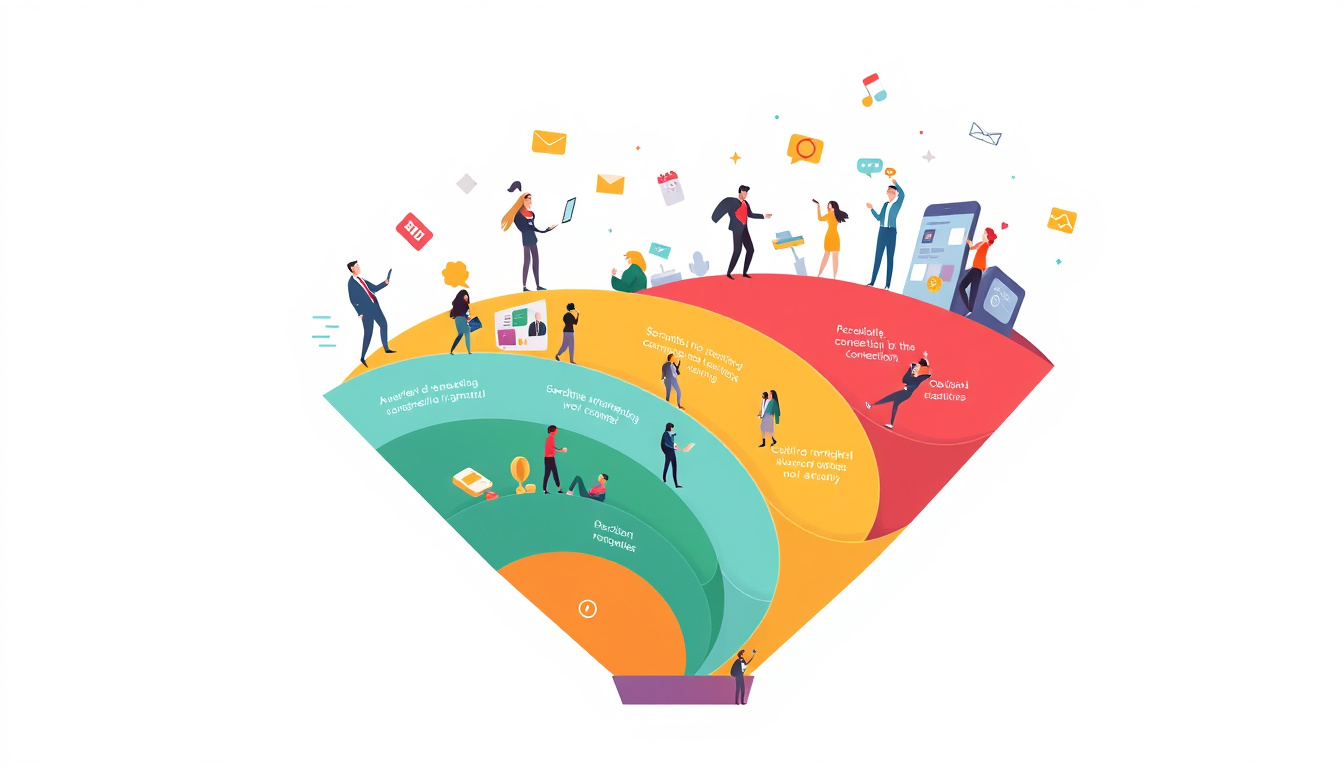
The marketing funnel stages represent the journey potential customers go through from the moment they become aware of a brand to the point of making a purchase. This funnel is typically divided into five key stages: Awareness, Interest, Consideration, Intent, and Purchase. In the Awareness stage, consumers discover your brand through various channels, such as social media, search engines, or word of mouth. Next, in the Interest stage, they actively seek more information, drawn by engaging content or compelling marketing messages. During the Consideration stage, potential customers evaluate your offerings against competitors, weighing their options carefully. As they move to the Intent stage, they are getting closer to making a purchase, often by placing items in their cart or looking for customer reviews. Finally, in the Purchase stage, customers finalize their decision and complete their transaction. Understanding these stages is crucial for marketers, as it allows them to tailor their strategies to guide prospects through the funnel effectively.
The Stages of the Marketing Funnel: A Detailed Breakdown
The marketing funnel stages represent the path a potential customer takes from first encountering a brand to making a purchase and beyond. Understanding these stages is crucial for effectively guiding prospects through their journey. The funnel typically includes five key stages: Awareness, Interest, Consideration, Intent, and Decision. In the Awareness stage, potential customers become aware of your brand and its offerings through various marketing channels. During the Interest stage, they seek more information, often visiting your website or social media. Next, in the Consideration stage, they evaluate your product’s features and benefits compared to competitors. The Intent stage follows, where prospects demonstrate a clear interest in making a purchase, often by placing an item in their cart. Finally, the Decision stage culminates in the buyer making a purchase. Each of these stages requires tailored marketing strategies to nurture leads and convert them into loyal customers.
‘Good marketing makes the company look smart. Great marketing makes the customer feel smart.’ – Joe Chernov

Importance of Target Audience in Each Funnel Stage
Defining the importance of target audience in each stage of the marketing funnel is crucial for developing effective marketing strategies. In the awareness stage, understanding who your potential customers are helps tailor your messaging to grab their attention. This could mean using demographics, interests, and pain points to reach them effectively. Moving to the consideration stage, knowing your target audience allows you to craft content that addresses their specific needs and interests, increasing the likelihood they will consider your product or service. Lastly, at the decision stage, having insights into your audience helps in personalizing offers or incentives that resonate with them, guiding them towards completing a purchase. By recognizing the significance of target audience insights at every funnel stage, businesses can optimize their marketing campaigns, enhance customer engagement, and ultimately drive conversions.
Techniques to Nurture Leads at Each Stage
To effectively nurture leads at each stage of the marketing funnel stages, it’s crucial to implement tailored strategies that resonate with potential customers based on their readiness to engage. At the Awareness Stage, focus on providing valuable content through blog posts, social media, and search engine optimization to educate prospects about their problems. Transitioning to the Consideration Stage, utilize webinars, case studies, and newsletters that address how your product or service can solve their challenges. Finally, in the Decision Stage, implement personalized email campaigns, offer trials, or demonstrate testimonials to encourage conversions. By understanding and addressing the needs of your leads at each marketing funnel stage, you can effectively guide them towards making a purchase.

Measuring Success: Key Performance Indicators for Funnel Stages
When it comes to evaluating the effectiveness of your marketing funnel stages, utilizing Key Performance Indicators (KPIs) is essential. KPIs are measurable values that demonstrate how effectively a company is achieving its key business objectives. In the context of marketing funnels, these indicators can help assess the efficiency of each stage, from awareness to conversion. For example, at the awareness stage, you may track metrics like website traffic and engagement rates on social media. At the consideration stage, email open and click-through rates serve as indicators of how potential customers are interacting with your content. Finally, during the conversion stage, metrics such as the conversion rate and average order value reveal whether your efforts are translating into sales. Understanding and measuring these KPIs allows businesses to fine-tune their marketing strategies, optimize their funnel stages, and ultimately enhance the customer journey.
Optimizing Your Sales Strategy for Maximum Conversion
To effectively optimize your sales strategy for maximum conversion, it’s essential to understand the marketing funnel stages. The marketing funnel is a model that represents the customer journey from awareness to decision. Typically, it consists of several stages: awareness, interest, consideration, intent, evaluation, and purchase. By analyzing where potential customers are in this funnel, you can tailor your marketing strategies to each stage. For instance, during the awareness stage, informative content such as blog posts and social media ads can help attract attention. As prospects move to the interest and consideration stages, targeted emails and persuasive landing pages can nurture their interest further. Understanding where your prospects are within the marketing funnel stages enables you to implement strategies that resonate with their needs, ultimately leading to higher conversion rates.
Frequently Asked Questions
What are the main stages of the marketing funnel?
The main stages of the marketing funnel include Awareness, Interest, Consideration, Intent, Evaluation, and Purchase. Each stage represents a step that potential customers take along their journey from discovering your brand to making a purchase.
How important is understanding the target audience in the marketing funnel?
Understanding your target audience is crucial at every stage of the marketing funnel. It allows you to tailor your messaging and strategies to meet the specific needs and preferences of your potential customers, which can significantly enhance engagement and conversion rates.
What techniques can be used to nurture leads at different funnel stages?
To nurture leads effectively, use various techniques such as personalized email marketing, informative content creation, social media engagement, retargeting ads, and providing valuable resources like webinars or ebooks tailored to each funnel stage.
What key performance indicators (KPIs) should I measure for each stage of the marketing funnel?
Key performance indicators for funnel stages include metrics such as traffic sources and engagement for the Awareness stage, lead conversion rates for the Interest stage, email open and click-through rates for Consideration, and customer sales conversion rates for the Purchase stage.
How can I optimize my sales strategy for better conversion rates?
Optimize your sales strategy by continually analyzing funnel performance, understanding customer behavior, implementing A/B testing for your marketing materials, refining your messaging based on feedback, and ensuring a seamless user experience from first contact to purchase.