
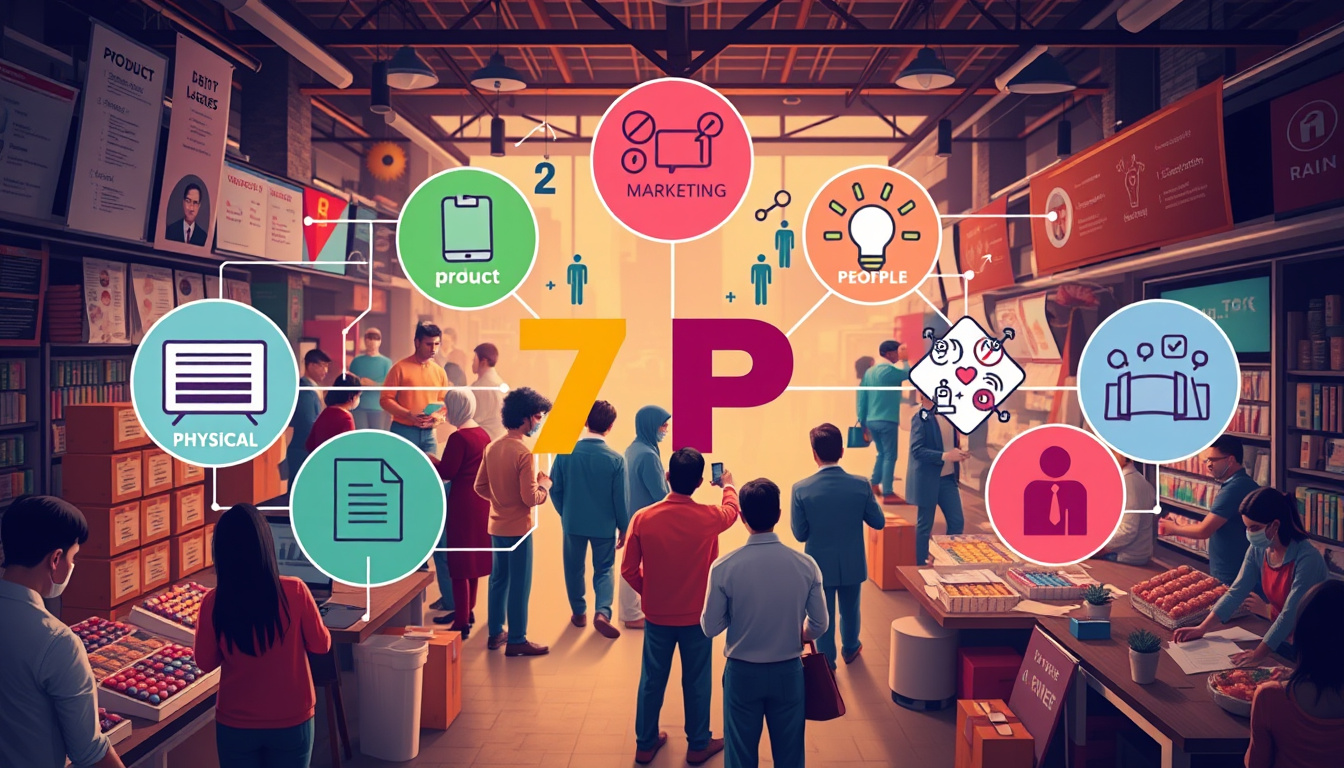
In today’s fast-paced digital landscape, mastering the marketing mix is essential for businesses aiming to thrive and grow. The 7Ps of marketing—Product, Price, Place, Promotion, People, Process, and Physical Evidence—offer a comprehensive framework that helps marketers strategize effectively. In this article, we will dive deep into each element of the marketing mix 7Ps, exploring how they interconnect and contribute to a cohesive marketing strategy. Whether you’re a small business owner or a marketing manager in a larger organization, understanding how to leverage the 7Ps can unlock new avenues of success and enhance your brand’s visibility in a competitive marketplace.

Key Takeaways
- The 7Ps of Marketing include Product, Price, Place, Promotion, People, Process, and Physical Evidence.
- Each element of the marketing mix works synergistically to enhance overall business success.
- Effective pricing strategies can significantly influence consumer purchasing decisions and sales outcomes.
- Promotional tactics are essential for increasing brand visibility and engaging target audiences.
- Real-life examples demonstrate how companies successfully implement the 7Ps to achieve strategic marketing goals.
Introduction to the 7Ps of Marketing
In today’s dynamic marketing landscape, entrepreneurs and small business owners face numerous challenges in effectively connecting with their target audience. One prominent framework that can help navigate these challenges is the marketing mix, commonly referred to as the 7Ps of marketing. This comprehensive model not only helps clarify your marketing strategy but also ensures that various elements work synergistically to achieve business objectives. In this article, we’ll delve into the 7Ps of marketing: Product, Price, Place, Promotion, People, Process, and Physical evidence. Each component plays a vital role in creating a balanced marketing strategy, ultimately enhancing customer satisfaction and driving growth. By understanding the marketing mix 7Ps, you’ll be better equipped to refine your approach to attract more customers, improve brand loyalty, and boost your overall marketing efforts.
Understanding Each Element of the Marketing Mix
The marketing mix 7Ps is a framework that incorporates seven key elements crucial to effectively marketing a product or service. These elements are Product, Price, Place, Promotion, People, Process, and Physical evidence. Understanding each element helps businesses identify the areas they need to focus on to satisfy customer needs and enhance their marketing strategies. For instance, the ‘Product’ refers to what you are selling, which includes the quality, design, and features that meet customer demands. ‘Price’ entails determining the right price point that reflects the perceived value and is competitively aligned. ‘Place’ addresses the distribution channels utilized to make the product available to customers. Furthermore, ‘Promotion’ involves the communication strategies employed to raise awareness and persuade customers. The ‘People’ element addresses the staff and sales personnel who interact with customers, while ‘Process’ includes the systems that deliver your service. Lastly, ‘Physical evidence’ comprises the tangible aspects that influence customer perceptions, such as packaging, branding, and the physical environment where the service is delivered. Mastering the marketing mix 7Ps ensures a comprehensive approach to strategy development, leading to better customer engagement and business growth.
‘Marketing is no longer about the stuff you make, but about the stories you tell.’ – Seth Godin

The Importance of Product in the 7Ps
In the realm of digital marketing, understanding the marketing mix 7Ps is crucial for businesses aiming to establish a competitive edge. The concept of the 7Ps—Product, Price, Place, Promotion, People, Process, and Physical Evidence—serves as a comprehensive framework for marketers to enhance customer experience and drive profitability. Among these elements, the Product plays a pivotal role as it encapsulates what a business offers to its customers. A well-defined product must meet the needs and expectations of the target market, drive customer satisfaction, and differentiate the brand from competitors. In today’s fast-paced environment, focusing on the right product not only helps in crafting an effective marketing strategy but also influences the effectiveness of other Ps: a superior product can justify a premium price, enhance promotional efforts, and improve distribution strategies. Therefore, recognizing the importance of the Product within the marketing mix 7Ps is essential for businesses looking to thrive in the competitive landscape.
Pricing Strategies and Their Impact on Sales
When it comes to the marketing mix 7Ps, pricing strategies play a crucial role in determining the overall success of a product or service. Pricing is not simply about setting a number; it reflects the perceived value of your offering, affects market positioning, and influences consumer purchasing behavior. The marketing mix includes Product, Price, Place, Promotion, People, Process, and Physical evidence, which all work together to optimize sales. A well-thought-out pricing strategy can attract target customers, encourage customer loyalty, and ultimately enhance sales performance. For instance, competitive pricing strategies might be effective for businesses in saturated markets, while value-based pricing can benefit those offering premium products. Understanding how to leverage these strategies within the larger marketing mix can significantly enhance a company’s ability to meet its sales goals and improve overall market presence.

Promotional Tactics to Enhance Brand Visibility
The marketing mix 7Ps is a comprehensive framework that helps businesses effectively enhance brand visibility. This model expands on the traditional 4Ps of marketing—product, price, place, and promotion—by adding three more elements: people, process, and physical evidence. To leverage the marketing mix effectively, businesses need to evaluate their product offerings, set competitive pricing, choose impactful promotional strategies, strategically select distribution channels, and ensure their team is trained to deliver excellent service. Furthermore, they must establish a coherent process that supports their marketing efforts and use tangible elements, such as branding materials in physical locations, to reinforce their brand image. By focusing on all 7Ps, businesses can craft a well-rounded promotional strategy that not only attracts attention but also fosters long-term customer engagement and loyalty.
Place: Distribution Channels and Their Role in Success
When discussing the marketing mix, particularly the acclaimed 7Ps, understanding the role of distribution channels, or Place, is pivotal for success. Distribution channels encompass the pathways through which products and services reach customers. They include various intermediaries like wholesalers, retailers, and direct sales. By effectively utilizing these channels, businesses can ensure their offerings are accessible to the target audience at the right time and place, ultimately driving sales and enhancing customer satisfaction. Analyzing the effectiveness of your distribution strategy can provide insights into customer preferences and market trends, leading to better alignment with your overall marketing objectives. In today’s competitive landscape, leveraging distribution channels is not just about selling products but also about creating a seamless customer experience.
Frequently Asked Questions
What are the 7Ps of Marketing?
The 7Ps of Marketing are Product, Price, Place, Promotion, People, Process, and Physical Evidence. These elements work together to create a successful marketing strategy.
Why is the Product element crucial in the 7Ps?
The Product element is crucial as it defines what you are offering to the market. A well-defined product meets customer needs and stands out from competitors, ultimately driving sales.
How do pricing strategies affect sales?
Pricing strategies can significantly impact sales by influencing customer perception, competitive positioning, and overall demand. A well-considered pricing strategy can increase sales volume and profitability.
What role does Promotion play in the marketing mix?
Promotion involves the tactics used to enhance brand visibility and communicate value to customers. Effective promotional strategies can increase awareness, engagement, and ultimately, sales.
Can you provide examples of companies that successfully apply the 7Ps strategy?
Companies like Apple and Nike excel with the 7Ps strategy by effectively combining quality products, innovative pricing, strategic distribution, and impactful marketing campaigns.